Educational Post – March 1, 2026
Choosing an orthodontic treatment is a major decision, and many patients ask the same question: Should I choose traditional braces or clear aligners? Both options are effective tools used by orthodontic specialists, yet each offers unique features that cater to different needs, preferences, and lifestyles.
At Morgan Orthodontics, we want patients to feel fully informed as they start their orthodontic journey. Below, we break down the key differences, advantages, and considerations to help you decide which treatment path may be right for you.
Understanding the Basics
What Are Braces?
Braces use metal or ceramic brackets attached to the teeth, connected by wires. Over time, the wires are adjusted to guide teeth into the correct position.
What Are Clear Aligners?
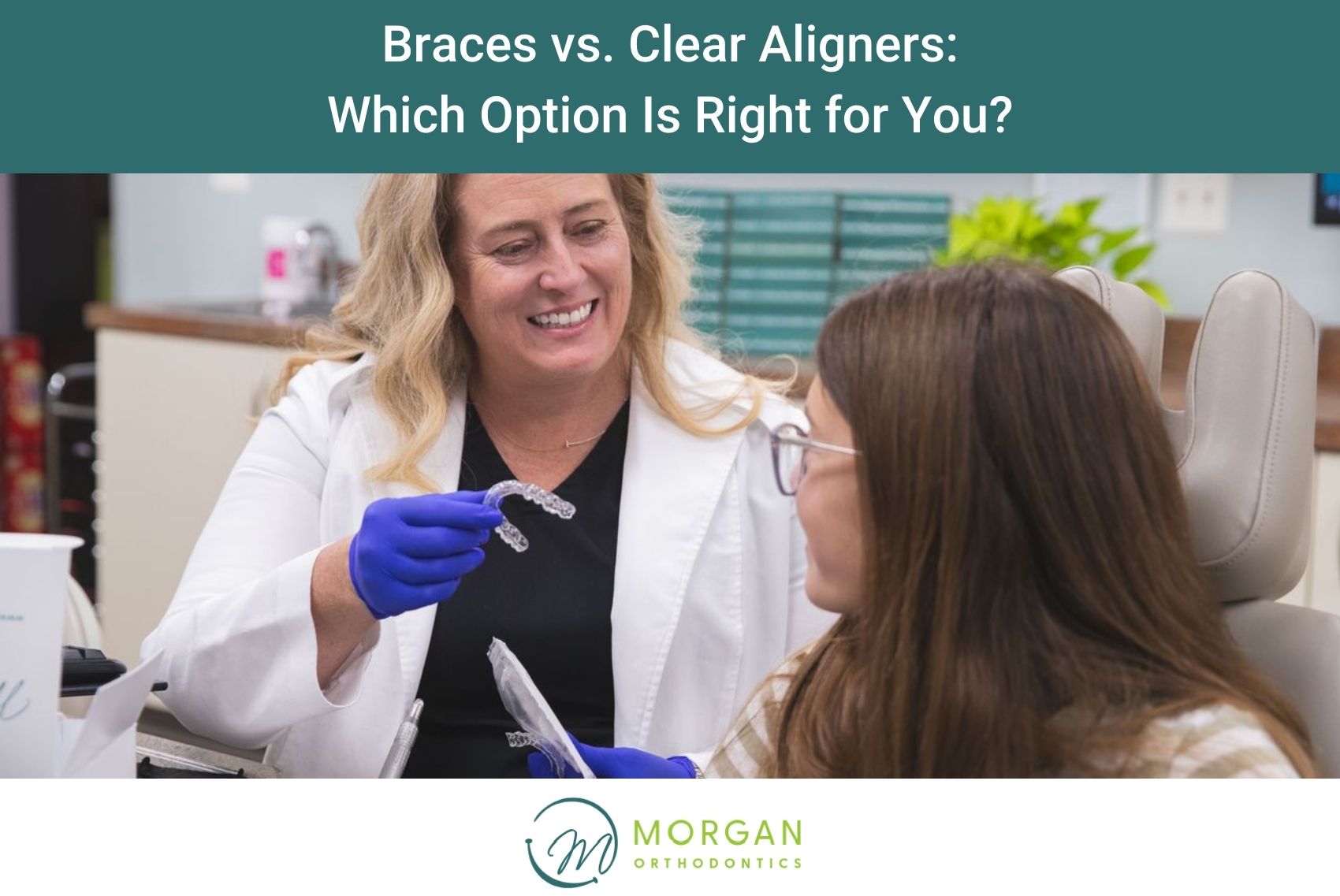
Clear aligners are custom-made, removable plastic trays that gently move teeth through a series of planned stages. Brands vary, but all follow a similar approach using digital scans and treatment planning.
Pros and Cons: Braces vs. Clear Aligners
Visibility
- Braces
- Metal braces are the most noticeable.
- Ceramic or tooth-colored options are less visible but still noticeable up close.
- Metal braces are the most noticeable.
- Clear Aligners
- Nearly invisible and blend with your natural smile.
- Best choice for patients concerned about aesthetics.
- Nearly invisible and blend with your natural smile.
Maintenance
- Braces
- Require consistent brushing and flossing around brackets and wires.
- No removing or losing appliances.
- Require consistent brushing and flossing around brackets and wires.
- Clear Aligners
- Must be removed to eat or drink anything besides water.
- Require rinsing, brushing, and safe storage throughout the day.
- Good compliance is essential.
- Must be removed to eat or drink anything besides water.
Comfort
- Braces
- May cause initial soreness, especially after adjustments.
- Some discomfort from brackets rubbing the cheeks or lips.
- May cause initial soreness, especially after adjustments.
- Clear Aligners
- Smooth plastic trays reduce irritation.
- Gentle pressure but typically less irritation than brackets.
- Smooth plastic trays reduce irritation.
Appointments
- Braces
- Require regular visits for wire adjustments.
- Predictable schedule, often every 4–8 weeks.
- Require regular visits for wire adjustments.
- Clear Aligners
- Appointments may be less frequent.
- Digital monitoring may be available depending on treatment plan.
- Appointments may be less frequent.
Treatment Versatility
- Braces
- Effective for all types of orthodontic cases, including complex concerns.
- Effective for all types of orthodontic cases, including complex concerns.
- Clear Aligners
- Excellent for mild to moderate cases.
- Advanced systems can address more complex issues, but braces may still be preferred by your orthodontist.
- Excellent for mild to moderate cases.
Lifestyle Considerations
Teens
- Braces are often recommended due to reliability and minimal responsibility.
- Clear aligners can be a great option for motivated teens who can wear them 20–22 hours a day.
College Students
- Clear aligners offer flexibility for busy schedules, social events, and changing routines.
- Braces may be preferred for students who want a hands-off approach with fewer daily responsibilities.
Adults
- Clear aligners are popular among adults seeking a discreet, professional look.
- Braces, especially ceramic, remain a great option for adults needing precise or complex corrections.
Which Option Suits You Best?
Choose Braces If You Want:
- The most comprehensive treatment for simple to complex cases
- A non-removable option that ensures consistent wear
- A cost-effective, reliable solution for all ages
Choose Clear Aligners If You Want:
- A nearly invisible treatment
- Fewer lifestyle restrictions
- Removable trays that fit easily into busy or professional schedules
- Comfort and convenience with modern digital treatment planning
Frequently Asked Questions (Q&A)
How long does treatment take with braces or clear aligners?
Treatment time varies, but most patients finish in 12 to 24 months. Your orthodontist will recommend the option that delivers the best results within the optimal timeframe.
Are clear aligners as effective as braces?
Yes, for many cases. Clear aligners work well for mild to moderate misalignments, while braces may be recommended for more complex issues.
Do clear aligners hurt less than braces?
Both options create pressure to move teeth. However, aligners typically cause less irritation because they lack brackets and wires.
Can I switch from braces to clear aligners mid-treatment?
In some cases, yes. An orthodontic evaluation can determine whether transitioning is appropriate.
Do I have to wear retainers after treatment?
Yes. Whether you choose braces or aligners, retainers are essential to maintain results.
Are aligners a good option for teens?
They can be, especially for teens who are responsible and willing to wear them consistently. Some aligner systems offer compliance indicators for added support.
Contact Morgan Orthodontics
Leesburg Office
19420 Golf Vista Plaza, Ste. 120
Leesburg, VA 20176
Phone: 703-723-5900
Winchester Office
1841 West Plaza Dr.
Winchester, VA 22601
Phone: 540-667-5446
Purcellville Office
610 E Main Street
Purcellville, VA 20132
Phone: 540-338-8125