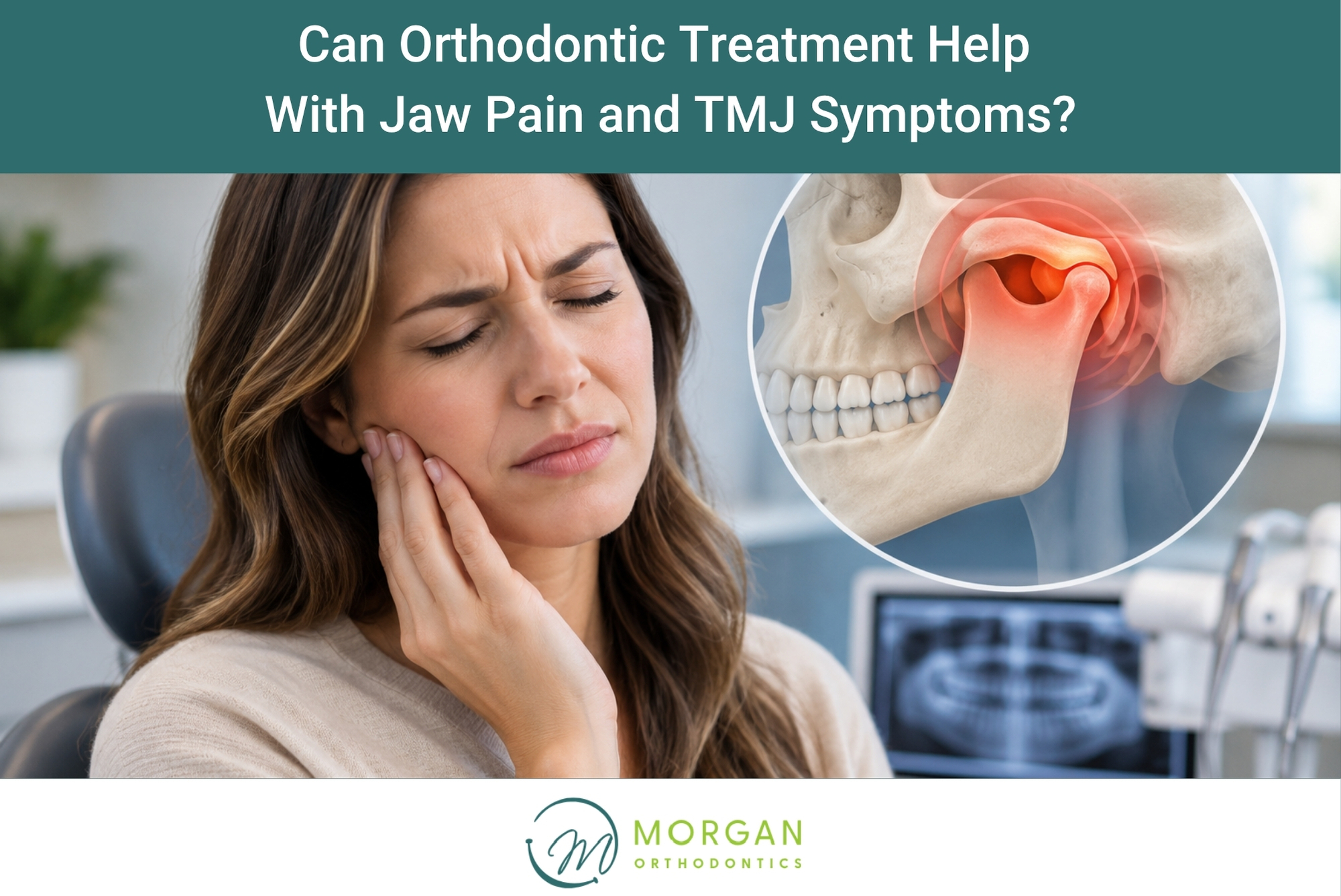
Jaw pain can interfere with eating, speaking, sleeping, and even concentrating throughout the day. For some patients, discomfort around the jaw joints is accompanied by clicking, popping, muscle tension, headaches, or difficulty opening the mouth comfortably. These symptoms are often associated with the temporomandibular joints (TMJs), the complex joints connecting the lower jaw to the skull.
Because the teeth, bite, jaw muscles, and temporomandibular joints function together, patients experiencing persistent discomfort may wonder whether orthodontic treatment could help. The answer depends on the underlying cause. Orthodontics is not a universal treatment for temporomandibular disorders (TMD), but evaluating tooth alignment and bite relationships can be an important part of determining whether orthodontic factors may be contributing to an individual patient’s symptoms.
For patients searching for an orthodontist for jaw pain in Northern Virginia, Morgan Orthodontics can evaluate dental and bite alignment and determine whether orthodontic care should be considered as part of a broader approach to jaw health.
Understanding TMJ and TMD
What Is the TMJ?
The temporomandibular joint is located on each side of the face, just in front of the ears. These joints allow the lower jaw, or mandible, to move during chewing, speaking, yawning, and swallowing.
Unlike a simple hinge, the TMJ performs both rotational and sliding movements. Each joint contains bone, cartilage, an articular disc, ligaments, and surrounding muscles that must work together efficiently.
What Is TMD?
TMJ refers specifically to the temporomandibular joint. TMD, or temporomandibular disorder, is the broader term used for conditions affecting the jaw joints, chewing muscles, and related structures.
TMD is not a single disease with a single cause. Symptoms may result from muscle tension, joint inflammation, injury, arthritis, disc-related problems, parafunctional habits such as clenching or grinding, or a combination of factors.
This is why a thorough evaluation is essential before determining whether orthodontic treatment is appropriate.
Common Symptoms Associated With Temporomandibular Disorders
Jaw Pain or Tenderness
Pain may occur directly around the jaw joint or within the muscles used for chewing. Some people notice symptoms primarily while eating, while others experience aching or tension even when the jaw is at rest.
Clicking or Popping
Clicking or popping sounds can occur when opening or closing the mouth. Joint noises alone do not necessarily indicate that treatment is needed, particularly when there is no pain or limitation in jaw movement. However, painful clicking or a significant change in jaw function should be evaluated.
Difficulty Opening the Mouth
Some TMD conditions can make it difficult to open the mouth fully. Patients may also describe catching, locking, or a sensation that the jaw is not moving normally.
Facial Pain and Muscle Fatigue
The muscles controlling the jaw extend across the cheeks, temples, and surrounding areas. Excessive muscle activity can therefore produce discomfort beyond the jaw joint itself.
Headaches
Muscle tension involving the jaw and temples may contribute to certain headaches. Because headaches have many possible causes, however, they should not automatically be attributed to TMD.
Ear-Related Sensations
Some patients report pressure, fullness, or discomfort around the ears despite having no primary ear disorder. The close anatomical relationship between the TMJs and ears can sometimes make jaw-related discomfort feel like an ear problem.
What Causes Jaw Pain and TMJ Symptoms?
Teeth Grinding and Jaw Clenching
Bruxism involves grinding or clenching the teeth, frequently during sleep or periods of stress. Repeated muscle contraction can place substantial strain on the chewing muscles and jaw joints.
Signs may include tooth wear, morning jaw soreness, headaches, or muscle fatigue.
Trauma or Injury
A blow to the jaw, sports injury, automobile accident, or other trauma can affect the joint, surrounding muscles, or supporting structures.
Arthritis and Joint Conditions
The temporomandibular joints can be affected by degenerative and inflammatory joint conditions. When the joint itself is the primary source of symptoms, orthodontic treatment alone would generally not address the underlying disease.
Muscle-Related Disorders
Many cases of jaw discomfort have a significant muscular component. Chronic tension, clenching, altered movement patterns, and overuse can contribute to pain.
Bite and Alignment Considerations
Orthodontists evaluate how the upper and lower teeth relate when the mouth closes and how the jaws function together. Significant malocclusion or certain skeletal relationships may be relevant to an individual patient’s functional concerns.
However, TMD is multifactorial. A particular bite pattern should not automatically be assumed to be the cause of jaw pain.
Can Orthodontic Treatment Help With Jaw Pain?
Orthodontic Treatment May Help Selected Patients
Orthodontic treatment may be beneficial when a careful examination identifies a clinically meaningful orthodontic problem that should be corrected for dental, functional, or skeletal reasons.
Braces or clear aligners can reposition teeth and improve dental alignment. In growing patients, certain orthodontic or orthopedic approaches may also help guide developing jaw relationships when clinically appropriate.
The goal should be to create a stable, functional bite and properly aligned teeth—not to promise that orthodontic treatment will cure TMD.
Orthodontics Is Not a Guaranteed TMJ Treatment
Scientific understanding of TMD has evolved considerably. Temporomandibular disorders can involve biological, mechanical, behavioral, and psychosocial factors, and no single treatment is appropriate for every patient.
Orthodontic treatment should therefore not be recommended solely on the assumption that straightening the teeth will eliminate jaw pain.
Instead, treatment decisions should be based on a complete orthodontic diagnosis and the patient’s individual clinical findings.
Why an Orthodontic Evaluation Can Be Valuable
Examining How the Teeth Fit Together
An orthodontist evaluates occlusion—the way the upper and lower teeth contact. This examination can identify crowding, spacing, crossbites, open bites, deep bites, overjets, and other alignment concerns.
Evaluating Jaw Relationships
Orthodontic diagnosis goes beyond whether teeth appear straight. The relationship between the upper jaw, lower jaw, and facial structures is also evaluated.
This can be especially important when patients have significant skeletal discrepancies or functional concerns.
Reviewing Jaw Function
During an evaluation, the orthodontist may discuss symptoms such as pain, clicking, locking, restricted movement, clenching, grinding, or changes in the way the teeth fit together.
The objective is to understand the entire clinical picture rather than focusing on one symptom in isolation.
Determining Whether Additional Evaluation Is Necessary
Because jaw pain can have many causes, some patients may benefit from evaluation by another healthcare professional. Depending on the symptoms, collaborative care may involve a general dentist, oral and maxillofacial specialist, physician, physical therapist, or another clinician experienced in temporomandibular disorders.
Braces, Clear Aligners, and Jaw Function
Braces
Traditional braces provide precise control over tooth movement and can correct many forms of malocclusion. For patients who have both orthodontic concerns and jaw symptoms, treatment planning should account for the patient’s existing symptoms and functional needs.
Clear Aligners
Clear aligners can also correct many alignment and bite problems. Whether aligners are appropriate depends on the complexity of the orthodontic problem, treatment objectives, and individual anatomy.
Neither braces nor clear aligners should automatically be considered a treatment for TMD. Their primary purpose is orthodontic tooth movement and bite correction.
Can Orthodontic Treatment Make TMJ Symptoms Worse?
Patients sometimes worry that braces or aligners will cause a temporomandibular disorder. Current evidence does not support the idea that routine orthodontic treatment is a predictable cause of TMD.
At the same time, jaw symptoms can naturally fluctuate. TMD is common enough that symptoms may appear before, during, or after orthodontic treatment without the orthodontic appliances necessarily being responsible.
Patients should tell their orthodontist about existing or new jaw pain, locking, limited opening, or other significant changes so these symptoms can be evaluated appropriately.
Why Conservative Diagnosis Matters
Jaw Pain Should Not Be Treated With a One-Size-Fits-All Approach
Because TMD can arise from multiple causes, responsible treatment begins with diagnosis rather than automatically recommending permanent changes to the bite.
Some patients may benefit from conservative measures or management directed at muscle activity, habits, inflammation, or another underlying condition.
Irreversible Treatment Requires a Clear Indication
Orthodontic treatment permanently changes tooth positions. It should therefore be recommended because there is a legitimate orthodontic indication and a well-defined treatment objective.
For patients with jaw pain, this distinction is particularly important. Treatment should address documented clinical findings rather than relying on promises that changing the bite will automatically resolve TMD symptoms.
When Should You Seek an Evaluation for Jaw Pain?
Occasional mild jaw fatigue may resolve without treatment. Persistent, recurring, or worsening symptoms deserve professional evaluation.
Consider scheduling an evaluation if you experience ongoing jaw pain, painful clicking or popping, difficulty chewing, restricted mouth opening, episodes of jaw locking, noticeable changes in your bite, or symptoms that interfere with normal daily activities.
Sudden severe pain, significant swelling, trauma, inability to open or close the mouth normally, or other acute symptoms may require more immediate medical or dental attention.
Choosing an Orthodontist for Jaw Pain in Northern Virginia
Patients searching for an orthodontist for jaw pain in Northern Virginia should look for a practice that considers the complete relationship among tooth alignment, bite, jaw development, and function.
Morgan Orthodontics serves patients from its offices in Leesburg, Winchester, and Purcellville, Virginia. An orthodontic consultation can help determine whether a meaningful alignment or bite issue is present and whether orthodontic treatment should be considered.
The most appropriate recommendation may be orthodontic treatment, continued observation, or referral for additional evaluation depending on the findings.
Frequently Asked Questions About Orthodontics, Jaw Pain, and TMJ Symptoms
Can braces cure TMJ problems?
Braces should not be considered a universal cure for TMD. They are designed to move teeth and correct orthodontic problems. If a patient has a significant orthodontic condition that warrants treatment, improving tooth and bite alignment may be beneficial to overall oral function, but improvement in TMD symptoms cannot be guaranteed.
Can clear aligners help with jaw pain?
Clear aligners can correct certain orthodontic problems, but they are not a general treatment for jaw pain. Whether aligners are appropriate depends on the patient’s diagnosis and orthodontic treatment needs.
Does an overbite cause TMJ pain?
An overbite or other malocclusion does not automatically cause TMD. Jaw disorders are multifactorial, and the presence of a bite irregularity does not prove that it is responsible for a patient’s symptoms.
Can teeth grinding cause jaw pain?
Yes. Frequent clenching or grinding can overwork the chewing muscles and may contribute to jaw soreness, muscle fatigue, headaches, and tooth wear.
Is clicking in my jaw always a problem?
No. Jaw clicking can occur without pain or functional impairment. However, painful clicking, locking, restricted movement, or worsening symptoms should be professionally evaluated.
Should I see an orthodontist or dentist for TMJ symptoms?
Either may be an appropriate starting point depending on your symptoms. An orthodontist is particularly qualified to evaluate tooth alignment, occlusion, and jaw relationships. Some patients require collaborative evaluation involving other dental or medical professionals.
Can crooked teeth cause jaw pain?
Crooked teeth alone do not necessarily cause jaw pain. The orthodontist must evaluate the entire bite, jaw relationships, muscle symptoms, and other potential contributing factors before determining whether an orthodontic problem is clinically significant.
Can TMJ problems cause headaches?
Jaw muscle tension and certain temporomandibular disorders can be associated with headaches, particularly around the temples. Because headaches have numerous possible causes, persistent or severe headaches should receive appropriate medical evaluation.
Will jaw pain disappear after my teeth are straightened?
There is no guarantee. Straightening teeth addresses orthodontic alignment, while jaw pain may arise from muscle, joint, behavioral, inflammatory, or other factors. Treatment outcomes depend on the actual cause of the symptoms.
Can teenagers develop TMJ symptoms?
Yes. Adolescents can experience jaw clicking, muscle soreness, clenching, headaches, and other symptoms. Because their teeth, jaws, and facial structures may still be developing, an individualized evaluation is important.
What should I tell my orthodontist if I already have TMJ symptoms?
Tell your orthodontist about pain, clicking, popping, locking, limited opening, headaches, clenching, grinding, previous jaw injuries, and any previous treatment for TMD. This information can be incorporated into diagnosis and treatment planning.
How do I know if my jaw pain is related to my bite?
It is difficult to determine without a professional evaluation. An orthodontist can assess your tooth alignment and jaw relationships while considering other potential causes of discomfort.
A Comprehensive Approach to Jaw Pain and Orthodontic Health
Jaw pain and TMJ symptoms can be frustrating, but effective care begins by identifying what is actually causing the problem. Because TMD can involve the joints, muscles, teeth, habits, and other factors, orthodontic treatment should never be viewed as an automatic solution.
When an orthodontic problem is present, braces, clear aligners, or another appropriate treatment may improve tooth alignment and establish a healthier, more functional bite. When symptoms appear to originate from another source, additional evaluation may be recommended.
For patients looking for an orthodontist for jaw pain in Northern Virginia, Morgan Orthodontics provides comprehensive orthodontic evaluations at locations in Leesburg, Winchester, and Purcellville. A personalized assessment can help determine whether orthodontic treatment has an appropriate role in your care.
Contact Information
Morgan Orthodontics
Leesburg Office
19420 Golf Vista Plaza, Ste. 120
Leesburg, VA 20176
Phone: 703-723-5900
Winchester Office
1841 West Plaza Dr.
Winchester, VA 22601
Phone: 540-667-5446
Purcellville Office
610 E Main Street
Purcellville, VA 20132
Phone: 540-338-8125
Website: morganorthodontics.com
Call Us: (703) 723-5900