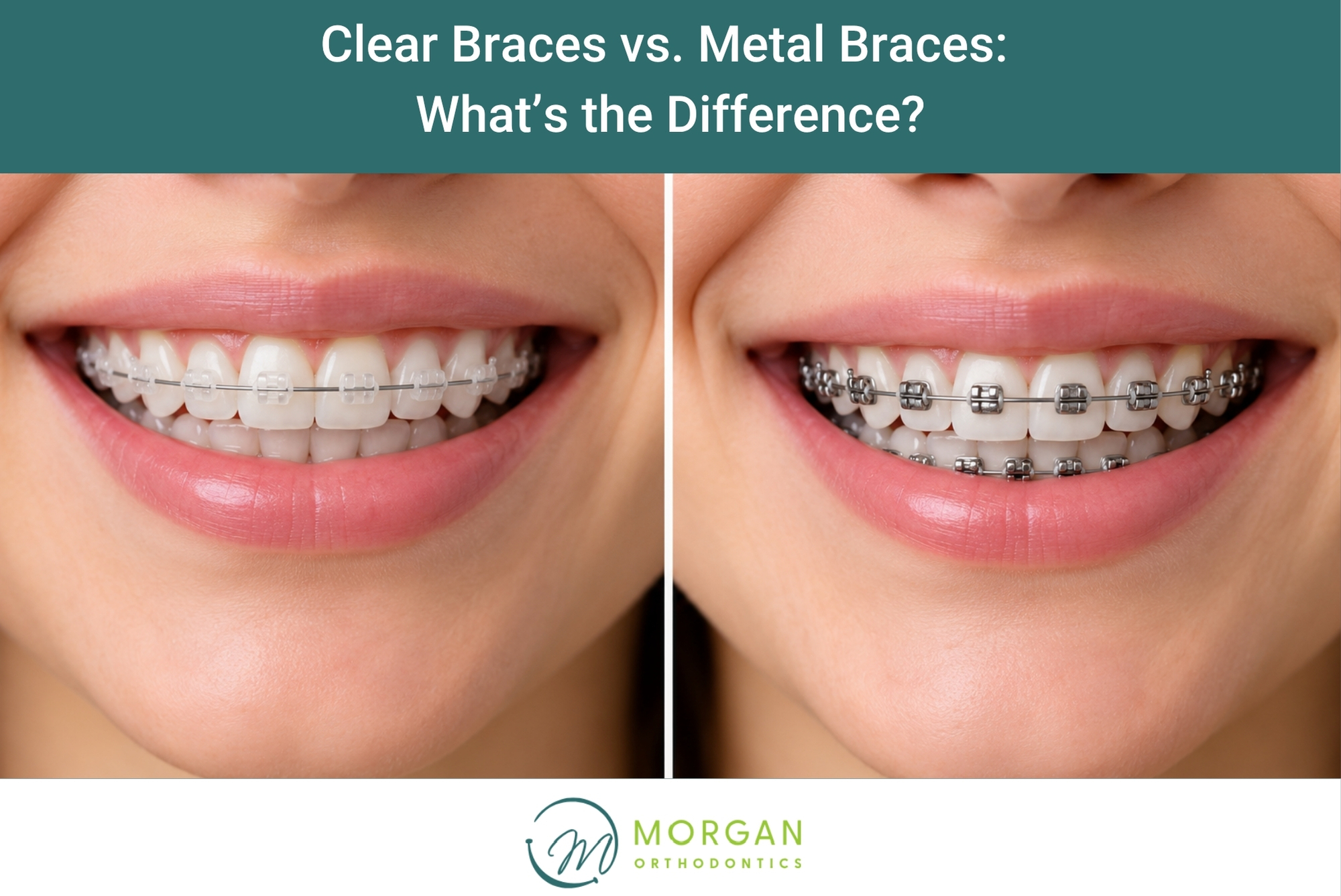
Choosing braces is an important step toward improving your smile, bite, and long-term oral health. While traditional metal braces remain one of the most established orthodontic treatment options, clear braces provide many patients with a less noticeable alternative that uses similar principles to move teeth into healthier positions.
For patients researching clear braces in Leesburg, VA, understanding the differences between clear and metal braces can make it easier to discuss treatment preferences with an orthodontist. Both options can effectively correct many types of tooth and bite misalignment, but they differ in appearance, materials, durability, maintenance, and cost.
At Morgan Orthodontics, treatment recommendations are based on each patient’s orthodontic needs, lifestyle, and goals. There is no universally “best” type of braces—the appropriate choice depends on the individual.
What Are Clear Braces?
How Clear Braces Work
Clear braces, often called ceramic braces, function similarly to conventional metal braces. Brackets are bonded to the teeth and connected by an orthodontic archwire. The orthodontist periodically adjusts the appliance so that controlled forces gradually guide the teeth toward their planned positions.
The primary difference is the bracket material. Clear braces typically use ceramic brackets designed to blend more closely with the natural color of the teeth.
Why Patients Choose Clear Braces
The main advantage of clear braces is aesthetics. Because ceramic brackets are less visually prominent than stainless-steel brackets, they may appeal to adults, professionals, college students, older teenagers, and others who want fixed orthodontic treatment with a more discreet appearance.
Patients searching for clear braces in Leesburg, VA may find this option particularly appealing when they want the predictable control of braces without the more noticeable appearance traditionally associated with metal brackets.
What Are Traditional Metal Braces?
How Metal Braces Straighten Teeth
Traditional braces use stainless-steel brackets attached to the teeth and connected by an archwire. Orthodontic forces transmitted through the brackets and wires gradually change tooth position.
Modern metal braces are generally smaller and more streamlined than earlier generations of orthodontic appliances. Advances in orthodontic materials and treatment planning have also made treatment increasingly precise and efficient.
Why Metal Braces Remain Popular
Metal braces are highly durable and capable of treating a broad range of orthodontic problems. They may be particularly useful for patients with complex tooth movements or significant bite discrepancies.
Because stainless steel is exceptionally strong, metal brackets can also withstand substantial everyday forces when patients follow their orthodontist’s dietary and care instructions.
Clear Braces vs. Metal Braces: The Major Differences
Appearance
Appearance is the most obvious distinction.
Clear braces use tooth-colored or translucent ceramic brackets that are designed to be less noticeable. Metal braces use stainless-steel brackets that remain visible when a patient smiles or speaks.
Patients who prioritize discretion frequently prefer ceramic braces for this reason.
Orthodontic Effectiveness
Both ceramic and metal braces can successfully treat many orthodontic conditions, including crowded teeth, excessive spacing, rotations, and certain bite abnormalities.
However, orthodontic treatment must be individualized. The severity and location of the orthodontic problem can influence which appliance provides the greatest control and efficiency.
An orthodontic evaluation allows the doctor to determine whether clear braces, metal braces, or another treatment method is appropriate.
Strength and Durability
Metal brackets generally provide greater resistance to breakage than ceramic brackets. Ceramic materials are strong, but they can be more brittle than stainless steel.
Patients with ceramic braces should therefore be especially careful about avoiding foods and habits that could damage their appliances.
Comfort
Both types of braces require an adjustment period. Temporary tenderness or pressure is common after braces are first placed and following certain adjustments.
Ceramic brackets may have a different shape or profile than metal brackets, but individual comfort varies considerably. Modern orthodontic appliances are designed with patient comfort in mind regardless of bracket material.
Staining and Discoloration
The ceramic bracket itself is designed to maintain its appearance, but certain components used with clear braces can become discolored.
Coffee, tea, dark-colored beverages, highly pigmented foods, tobacco products, and inadequate oral hygiene can contribute to visible staining around orthodontic appliances.
Careful brushing and adherence to the orthodontist’s recommendations can help preserve a cleaner appearance.
Cost
Clear ceramic braces may cost more than conventional metal braces because of differences in materials and treatment considerations.
The total cost of orthodontic treatment depends on several variables, including case complexity, treatment duration, appliance selection, and the patient’s individualized treatment plan.
Patients should discuss financial considerations during their orthodontic consultation rather than choosing treatment based solely on an estimated general price.
What Orthodontic Problems Can Clear Braces Treat?
Crowded Teeth
Dental crowding occurs when there is insufficient room for teeth to align normally within the dental arches. Braces can progressively reposition crowded teeth to create a more functional and balanced alignment.
Gaps Between Teeth
Excessive spaces between teeth may result from differences in tooth size, jaw dimensions, missing teeth, or other developmental factors. Clear braces may be used to close or redistribute these spaces depending on the patient’s treatment plan.
Overbites
An excessive vertical overlap of the upper front teeth over the lower teeth is commonly described as a deep overbite. Orthodontic treatment can help improve the relationship between the upper and lower teeth when clinically appropriate.
Crossbites
A crossbite occurs when certain upper teeth bite inside the corresponding lower teeth rather than outside them. Depending on the cause and severity, braces and other orthodontic appliances may be used to correct the abnormal relationship.
Open Bites
An open bite occurs when certain upper and lower teeth do not contact when the jaws are closed. Treatment may involve braces as well as other orthodontic strategies based on the underlying cause.
Are Clear Braces the Same as Clear Aligners?
Fixed Braces vs. Removable Aligners
No. Clear braces and clear aligners are fundamentally different orthodontic appliances.
Clear braces remain attached to the teeth throughout active treatment. Ceramic brackets are connected by wires that the orthodontist uses to control tooth movement.
Clear aligners are removable plastic trays that fit over the teeth and are replaced sequentially as treatment progresses.
Both approaches can provide a discreet appearance, but candidacy depends on the patient’s diagnosis, treatment objectives, and ability to follow treatment instructions.
Oral Hygiene With Clear or Metal Braces
Brushing Around Brackets and Wires
Excellent oral hygiene is essential during orthodontic treatment. Plaque can accumulate around brackets and beneath wires, increasing the risk of tooth decay, gum inflammation, and visible enamel changes.
Patients should carefully clean around every bracket, along the gumline, and between the teeth.
Cleaning Between the Teeth
Floss threaders, orthodontic flossers, interdental brushes, and other recommended cleaning tools can make it easier to clean around orthodontic appliances.
The specific products a patient needs may vary, so patients should follow individualized instructions provided by their orthodontic and dental teams.
Continue Routine Dental Visits
Orthodontic appointments do not replace routine dental care. Patients should continue receiving professional dental examinations and cleanings according to their dentist’s recommendations throughout orthodontic treatment.
Foods to Avoid With Braces
Protecting Your Orthodontic Appliances
Both ceramic and metal braces can be damaged by inappropriate foods. Patients are commonly advised to avoid particularly hard, sticky, or chewy foods that could loosen brackets or distort wires.
Hard candies, ice, sticky candy, and similar foods can create unnecessary risks. Harder fruits and vegetables may need to be cut into smaller pieces rather than bitten directly with the front teeth.
Following dietary instructions can reduce the risk of appliance damage and prevent avoidable interruptions in treatment.
Which Type of Braces Is Better for Adults?
Discreet Treatment for Professional and Social Settings
Many adults are interested in clear braces because ceramic brackets are less noticeable during conversations, meetings, photographs, and other social situations.
However, aesthetics are only one consideration. The patient’s bite, tooth position, treatment complexity, oral hygiene, and lifestyle should all be evaluated before choosing an appliance.
Adults researching clear braces in Leesburg, VA can schedule an orthodontic consultation to compare their treatment options and determine whether ceramic braces are appropriate for their needs.
Which Type of Braces Is Better for Teenagers?
Both metal and clear braces may be appropriate for teenagers.
Metal braces are often attractive for younger patients because of their durability, while ceramic braces may appeal to image-conscious teenagers who prefer a less noticeable appliance.
The orthodontist can evaluate tooth development, bite relationships, treatment complexity, and lifestyle factors before recommending an option.
How Long Does Treatment With Braces Take?
Treatment Time Is Individualized
There is no single treatment duration that applies to every patient. Treatment length depends on factors such as the severity of the orthodontic problem, the type and amount of tooth movement required, biological response to treatment, appliance integrity, and patient cooperation.
Attending scheduled appointments, maintaining good oral hygiene, protecting the appliances, and following instructions regarding elastics or other components can help treatment progress according to plan.
Why Orthodontic Treatment Is About More Than Appearance
Straightening teeth can certainly improve the appearance of a smile, but orthodontic treatment also focuses on function and oral health.
Properly aligned teeth may be easier to clean effectively. Improving certain bite relationships can also create better contact between the upper and lower teeth and contribute to balanced oral function.
Orthodontic treatment therefore involves much more than simply making the front teeth appear straighter. Comprehensive treatment considers tooth position, bite relationships, supporting tissues, facial balance, and long-term stability.
Choosing Clear Braces in Leesburg, VA
Patients considering clear braces in Leesburg, VA should begin with a comprehensive orthodontic evaluation. An orthodontist can assess the teeth, jaws, bite, and overall treatment needs before recommending the most appropriate appliance.
Morgan Orthodontics provides orthodontic care for patients at offices in Leesburg, Winchester, and Purcellville, Virginia. Treatment options can be discussed based on clinical needs, aesthetic preferences, lifestyle, and individual treatment goals.
Whether clear ceramic braces or traditional metal braces are ultimately selected, the objective remains the same: achieving a healthy, functional, stable, and confident smile.
Frequently Asked Questions About Clear Braces vs. Metal Braces
Are clear braces as effective as metal braces?
Clear ceramic braces can effectively treat many of the same orthodontic problems as metal braces. However, appliance selection should be based on the patient’s diagnosis and the specific tooth movements required.
Do clear braces take longer than metal braces?
Not necessarily. Treatment duration depends on the complexity of the case, biological response to tooth movement, treatment mechanics, and patient cooperation. The type of bracket is only one factor.
Do clear braces stain?
Ceramic brackets are designed to resist discoloration, but surrounding elastic components may become stained by strongly pigmented foods, beverages, smoking, or inadequate oral hygiene.
Are clear braces more fragile than metal braces?
Ceramic brackets can be more brittle than stainless-steel brackets. Patients with clear braces should follow dietary recommendations carefully to minimize the risk of breakage.
Are clear braces noticeable?
Clear braces are still visible, but their tooth-colored or translucent brackets generally make them less noticeable than conventional stainless-steel braces.
Can adults get clear braces?
Yes. Adults frequently choose ceramic braces because they provide fixed orthodontic treatment with a more discreet appearance.
Can teenagers get clear braces?
Yes, depending on their orthodontic needs and the orthodontist’s recommendation. Durability, oral hygiene, lifestyle, and treatment complexity should be considered.
Are clear braces removable?
No. Clear ceramic braces are fixed appliances bonded to the teeth. Clear aligners, by contrast, are removable.
Can I drink coffee with clear braces?
Patients can generally consume coffee while wearing ceramic braces, but coffee and other dark beverages may contribute to discoloration of certain components. Good oral hygiene and following the orthodontist’s care recommendations are important.
Do clear braces hurt?
Patients may experience temporary pressure, tenderness, or irritation when braces are initially placed or adjusted. This usually reflects the forces being applied to move the teeth and commonly improves as the mouth adapts.
Which braces are easier to keep clean?
Both clear and metal braces require diligent oral hygiene. Brackets and wires create additional surfaces where plaque and food debris can accumulate, so careful brushing and interdental cleaning are important regardless of bracket type.
How do I know whether clear or metal braces are right for me?
A comprehensive orthodontic evaluation is the best way to determine which option is appropriate. The orthodontist can evaluate your bite, tooth alignment, treatment complexity, oral health, lifestyle, and aesthetic preferences before making a recommendation.
Should I choose clear braces just because they are less noticeable?
Appearance can be an important factor, but it should not be the only consideration. Durability, treatment mechanics, cost, oral hygiene, and the complexity of the orthodontic problem should also influence the decision.
What happens after braces are removed?
After active orthodontic treatment is completed, patients typically transition to retention. Retainers help maintain the corrected tooth positions while the surrounding tissues adapt. Long-term retainer use should follow the orthodontist’s instructions because teeth can shift throughout life.
Schedule a Clear Braces Consultation With Morgan Orthodontics
Choosing between clear and metal braces is easier when you understand how each option relates to your specific orthodontic needs.
If you are considering clear braces in Leesburg, VA, Morgan Orthodontics can evaluate your smile and bite and discuss available orthodontic treatment options. A personalized consultation provides the opportunity to compare aesthetics, treatment requirements, maintenance, and other factors before deciding which type of braces is right for you.
Contact Information
Morgan Orthodontics
Leesburg Office
19420 Golf Vista Plaza, Ste. 120
Leesburg, VA 20176
Phone: 703-723-5900
Winchester Office
1841 West Plaza Dr.
Winchester, VA 22601
Phone: 540-667-5446
Purcellville Office
610 E Main Street
Purcellville, VA 20132
Phone: 540-338-8125
Website: morganorthodontics.com
Call Us: (703) 723-5900