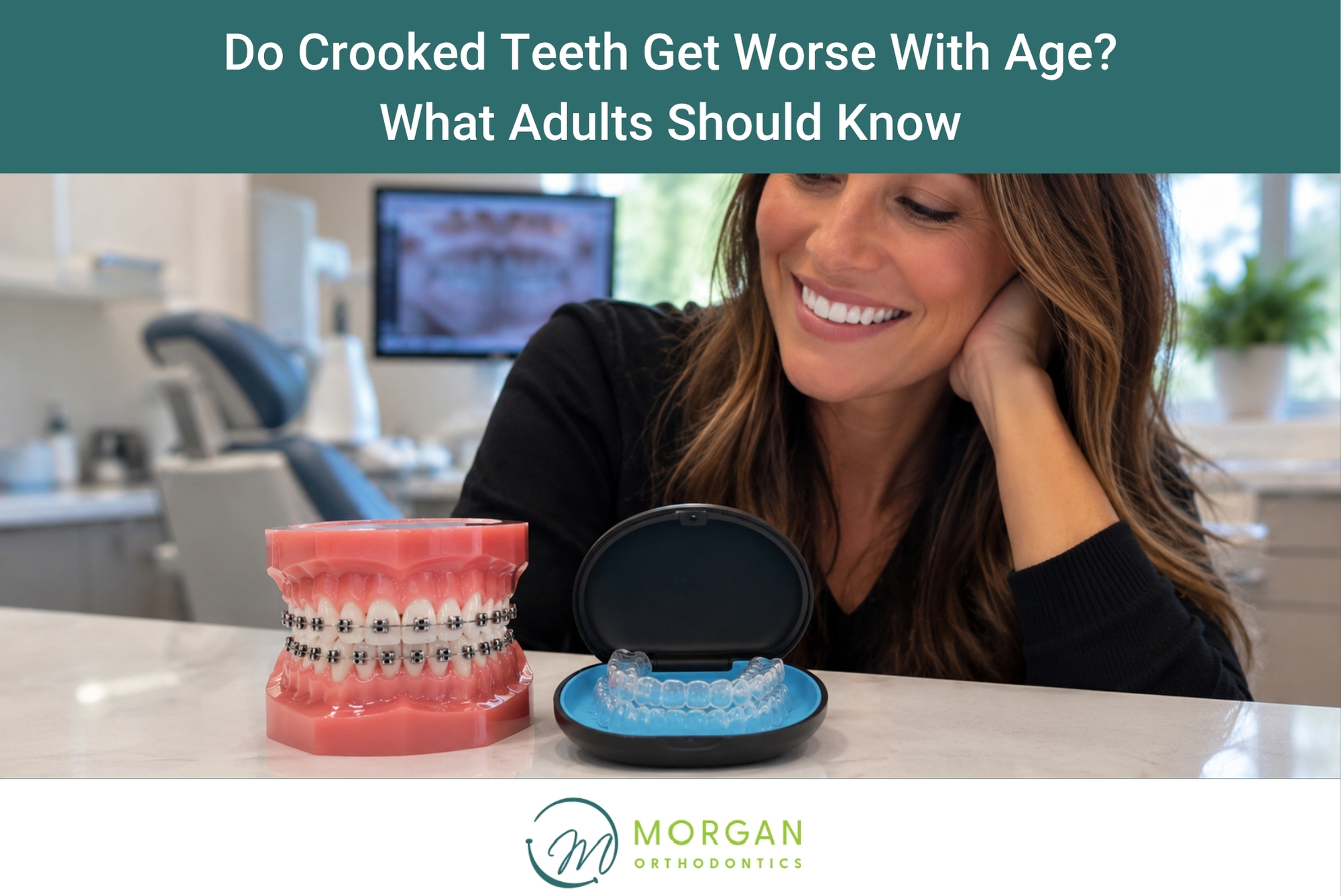
Many adults assume that once their teeth have settled into place, their smile will remain essentially unchanged. In reality, teeth can continue to shift throughout adulthood. Crowding, overlapping, rotations, and changes in the bite may gradually become more noticeable with age—even in people who had relatively straight teeth when they were younger.
Age-related dental changes do not necessarily mean that every adult will develop severely crooked teeth. However, the structures supporting the teeth are dynamic, and factors such as natural tooth movement, gum health, tooth loss, grinding, and inconsistent retainer use can contribute to changes in alignment.
For adults considering adult orthodontics in Leesburg, VA, understanding why teeth move and when treatment may be beneficial can help protect both the appearance and function of the smile.
Why Teeth Can Shift Throughout Adulthood
Teeth Are Not Permanently Fixed in Place
Although teeth are firmly supported by the jawbone and periodontal tissues, they are not fused directly to the bone. Each tooth is surrounded by a periodontal ligament, a specialized connective tissue that helps anchor the tooth while allowing small amounts of physiological movement.
This biological adaptability is what makes orthodontic treatment possible. Controlled orthodontic forces stimulate changes in the surrounding tissues and bone, allowing teeth to move gradually into healthier positions.
However, it also means that teeth can continue to shift naturally over a lifetime.
Natural Changes in the Jaw and Facial Structures
The face and jaws continue to undergo subtle changes throughout adulthood. These changes can influence tooth position and bite relationships.
One common pattern is increasing crowding of the lower front teeth. Teeth that once appeared relatively straight may begin overlapping or rotating as the years pass.
These changes can occur even in adults who have never undergone orthodontic treatment.
Why Crooked Teeth May Become More Noticeable With Age
Several factors can contribute to progressive tooth movement.
Previous Orthodontic Treatment Without Consistent Retainer Use
One of the most common reasons adults experience shifting is orthodontic relapse.
After braces or clear aligner treatment, teeth have a natural tendency to move toward previous positions. Retainers help maintain the corrected alignment while the tissues surrounding the teeth adapt.
Even many years after treatment, discontinuing retainer wear can allow gradual movement to occur.
Adults who had braces as teenagers may therefore notice crowding, spacing, or rotations developing decades later.
Changes in Gum and Bone Health
Healthy gums and supporting bone play an essential role in keeping teeth stable.
Periodontal disease can damage the tissues and bone surrounding the teeth. As this support decreases, teeth may become mobile, migrate, tilt, or develop spaces between them.
Sudden or significant changes in tooth position should therefore be evaluated by a dental professional. In some cases, changing alignment can be a sign of an underlying oral health condition rather than ordinary age-related movement.
Missing Teeth
When a tooth is lost and not replaced, neighboring teeth may gradually move toward the open space. Opposing teeth may also shift because they no longer have normal contact with a tooth in the opposite arch.
These movements can alter the bite and create additional spacing or crowding.
Orthodontic treatment may sometimes be incorporated into a broader restorative treatment plan to establish appropriate spacing before replacing a missing tooth.
Teeth Grinding and Clenching
Bruxism—the habitual grinding or clenching of teeth—can place substantial forces on the teeth and supporting structures.
Over time, excessive forces may contribute to tooth wear, changes in the bite, muscle discomfort, and other dental problems. Patients who grind their teeth should have both their alignment and the underlying causes and consequences of bruxism evaluated.
Everyday Functional Forces
Teeth are continually exposed to forces from chewing, swallowing, the tongue, lips, and surrounding muscles.
Normally, these forces exist in a functional balance. Changes in oral habits, tooth position, muscle activity, or dental health can alter that balance and potentially contribute to gradual movement.
Is Lower Front Tooth Crowding Normal With Age?
Increasing crowding of the lower incisors is a frequently observed change during adulthood.
The lower front teeth may gradually rotate or overlap even if they were straight earlier in life. This does not necessarily indicate a serious problem, but increasing crowding deserves evaluation when it affects oral hygiene, comfort, appearance, or bite function.
An orthodontic examination can determine whether the changes are primarily cosmetic or whether they may affect long-term dental health.
Crooked Teeth Are More Than a Cosmetic Concern
Adults often pursue orthodontic treatment because they want a straighter smile, but tooth alignment can also influence oral function and hygiene.
Crowded Teeth Can Be More Difficult to Clean
When teeth overlap significantly, certain surfaces can become more difficult to reach with a toothbrush and interdental cleaning.
Plaque accumulation in difficult-to-clean areas can increase the risk of tooth decay and gum inflammation.
Orthodontic treatment does not replace proper oral hygiene, but improving alignment can make effective cleaning easier for some patients.
Bite Problems Can Affect Tooth Wear
An uneven bite may cause certain teeth to receive disproportionate forces during chewing or clenching.
Depending on the individual bite, this can contribute to abnormal wear, chipping, or stress on particular teeth.
Orthodontic treatment seeks not only to improve alignment but also to establish appropriate relationships between the upper and lower teeth.
Alignment May Affect Long-Term Restorative Dentistry
Tooth position can become particularly important when adults need crowns, bridges, dental implants, or other restorative procedures.
In some cases, orthodontic treatment may be recommended before restorative dentistry to create appropriate space, improve tooth position, or establish a more favorable bite.
This interdisciplinary approach can help create a stronger foundation for long-term dental treatment.
Is There an Age Limit for Orthodontic Treatment?
There is no universal upper age limit for orthodontic treatment.
Successful tooth movement depends more on the health of the teeth, gums, supporting bone, and overall oral condition than on a patient’s chronological age.
Adults in their 30s, 40s, 50s, 60s, and beyond may potentially be candidates for orthodontic treatment when their oral health allows it.
The treatment plan may differ from that of a growing child or teenager because adult jaw growth is largely complete and adults may have restorations, missing teeth, periodontal concerns, or other dental considerations.
That is why individualized evaluation is particularly important in adult orthodontics.
Adult Orthodontics in Leesburg, VA: What Treatment May Involve
Adults considering adult orthodontics in Leesburg, VA should begin with a comprehensive orthodontic evaluation.
The orthodontist assesses the position of the teeth, bite relationships, jaw alignment, periodontal considerations, and the patient’s treatment goals. Diagnostic records may also be used to develop an individualized treatment plan.
Depending on the patient’s needs, treatment may involve braces, clear aligners, or another orthodontic approach.
The appropriate option depends on the complexity of the tooth movement required rather than appearance or convenience alone.
Braces for Adults
Modern braces remain an effective option for treating a broad range of orthodontic conditions.
Braces allow orthodontists to apply carefully controlled forces to individual teeth and can be appropriate for simple alignment concerns as well as more complex bite problems.
For some adults, braces may provide the level of control needed to achieve predictable movement.
Clear Aligners for Adults
Clear aligners can provide a discreet orthodontic option for appropriately selected patients.
Treatment generally involves wearing a planned sequence of removable aligners that progressively move the teeth. Because the aligners are removable, patients can take them out for eating and oral hygiene.
Successful treatment requires consistent wear according to the orthodontist’s instructions.
Clear aligners can treat many orthodontic concerns, but they are not automatically the ideal solution for every patient. A professional evaluation is necessary to determine whether aligners can accomplish the required movements effectively.
When Should an Adult See an Orthodontist?
Adults do not need to wait until crooked teeth become severe before requesting an evaluation.
Consider scheduling an orthodontic consultation if you notice increasing crowding, new spaces between teeth, changes in the way your teeth fit together, teeth shifting after previous orthodontic treatment, difficulty keeping crowded areas clean, or dissatisfaction with the alignment of your smile.
An evaluation can determine whether treatment is necessary, optional, or simply something that should be monitored.
What If Your Teeth Suddenly Start Moving?
Gradual changes can occur naturally, but rapid or unexplained tooth movement deserves professional attention.
New spacing, tooth mobility, significant bite changes, or rapidly changing alignment may be associated with periodontal problems, tooth loss, trauma, or other dental conditions.
Orthodontic treatment should not begin until relevant oral health problems have been identified and appropriately managed.
Why Gum Health Matters Before Adult Orthodontic Treatment
Healthy periodontal tissues are especially important when planning orthodontic treatment for adults.
Because orthodontic forces act through the tissues and bone surrounding the teeth, active periodontal disease generally needs to be controlled before treatment proceeds.
Adults with a history of periodontal disease may still be candidates for orthodontic treatment, but coordinated care between the orthodontist and general dentist or periodontist may be necessary.
Can Orthodontics Fix Teeth That Shifted After Braces?
In many cases, yes.
Adults who previously had braces or aligners may develop orthodontic relapse, particularly if retainers were lost, damaged, or no longer worn consistently.
The amount of retreatment required depends on how far the teeth have moved and whether the bite has changed.
Minor relapse may require relatively limited correction, while substantial tooth or bite movement may require more comprehensive orthodontic treatment.
Why Retainers Matter After Adult Orthodontic Treatment
Orthodontic treatment does not end when braces are removed or the final active aligner is completed.
Retention is essential for maintaining the new positions of the teeth.
Because teeth can continue to shift throughout life, long-term retainer wear is commonly an important part of preserving orthodontic results. The exact retainer type and recommended schedule should be determined by the orthodontist.
Patients should also have retainers evaluated if they become damaged, uncomfortable, or no longer fit correctly.
Benefits of Addressing Crooked Teeth as an Adult
Orthodontic treatment can provide benefits beyond creating a straighter-looking smile.
Depending on the patient’s original condition, treatment may improve tooth alignment, bite relationships, access for brushing and flossing, distribution of biting forces, and preparation for restorative dental procedures.
A properly planned treatment approach considers both aesthetics and long-term oral function.
Why Choose Morgan Orthodontics for Adult Orthodontic Care?
Adult orthodontic treatment requires an individualized approach because no two patients have identical dental histories, bite relationships, or treatment priorities.
Morgan Orthodontics provides orthodontic care for patients throughout Leesburg, Winchester, Purcellville, and surrounding Northern Virginia communities.
Whether teeth have gradually become more crowded with age, shifted after previous braces, or have never been treated orthodontically, a comprehensive evaluation can help determine the appropriate next step.
Frequently Asked Questions About Crooked Teeth and Adult Orthodontics
Do crooked teeth actually get worse as you get older?
They can. Teeth may gradually shift throughout adulthood, and some people experience increasing crowding, rotations, or spacing as they age. The amount of change varies considerably from person to person.
Why are my bottom teeth becoming more crooked?
Lower front tooth crowding is a common adult alignment change. Natural changes in the dental arches, previous orthodontic relapse, periodontal health, and other individual factors may contribute.
Can my teeth shift even if I had braces?
Yes. Teeth can shift after braces or clear aligner treatment, particularly when retainers are not worn as recommended. This is known as orthodontic relapse.
Am I too old for braces or clear aligners?
Age alone generally does not determine whether someone can receive orthodontic treatment. The health of the teeth, gums, and supporting bone is more important. An orthodontist can determine whether treatment is appropriate.
Should I be concerned if my teeth suddenly become crooked?
Rapid or unexpected tooth movement should be evaluated. Significant changes can sometimes be associated with gum disease, tooth loss, trauma, or other dental conditions.
Can crooked teeth cause gum problems?
Crowded or overlapping teeth can create areas that are more challenging to clean effectively. This may contribute to plaque accumulation and gum inflammation. However, gum disease has multiple causes, so professional dental care and consistent oral hygiene remain essential.
Can adult orthodontics improve my bite?
Yes. Depending on the condition, orthodontic treatment can address both tooth alignment and certain bite relationships. The extent of correction possible depends on the individual’s anatomy and diagnosis.
Are clear aligners better than braces for adults?
Neither option is universally better. Clear aligners offer removability and a discreet appearance, while braces can provide advantages for certain types of tooth movement. The best treatment depends on the patient’s orthodontic needs and ability to follow the treatment plan.
How long does adult orthodontic treatment take?
Treatment time varies according to the severity of crowding or bite problems, the movements required, the treatment method, and patient cooperation. An individualized estimate can be provided after an orthodontic evaluation.
Do adults need to wear retainers forever?
Long-term retention is commonly recommended because teeth can continue to shift throughout life. The frequency and type of retainer wear should follow the orthodontist’s specific recommendations.
What should I do if my old retainer no longer fits?
Do not force a retainer that is extremely tight, painful, damaged, or clearly does not fit. Schedule an orthodontic evaluation to determine how much movement has occurred and whether a new retainer or additional treatment is appropriate.
Is adult orthodontic treatment only cosmetic?
No. While improving smile appearance is an important goal for many patients, orthodontic treatment may also improve bite relationships, facilitate oral hygiene, redistribute biting forces, or help prepare the mouth for restorative dental treatment.
When is the best time to correct shifting teeth?
Evaluation is worthwhile as soon as you notice meaningful changes. Addressing an orthodontic concern before substantial movement occurs may provide more treatment options, although the appropriate timing depends on the individual case.
Take the Next Step Toward a Healthier, Straighter Smile
Crooked teeth do not necessarily remain unchanged throughout adulthood. Natural aging, orthodontic relapse, changes in periodontal support, missing teeth, and other factors can influence alignment over time.
The good news is that adulthood does not automatically prevent orthodontic treatment. If you have noticed that your teeth are becoming increasingly crowded, your bite feels different, or a previously straight smile has started to shift, an orthodontic evaluation can help identify the cause and determine whether treatment would be beneficial.
For patients searching for adult orthodontics in Leesburg, VA, Morgan Orthodontics can evaluate your current alignment, discuss your goals, and develop an individualized treatment plan designed to support both smile aesthetics and long-term oral health.
Contact Information
Morgan Orthodontics
Leesburg Office
19420 Golf Vista Plaza, Ste. 120
Leesburg, VA 20176
Phone: 703-723-5900
Winchester Office
1841 West Plaza Dr.
Winchester, VA 22601
Phone: 540-667-5446
Purcellville Office
610 E Main Street
Purcellville, VA 20132
Phone: 540-338-8125
Website: morganorthodontics.com
Call Us: (703) 723-5900