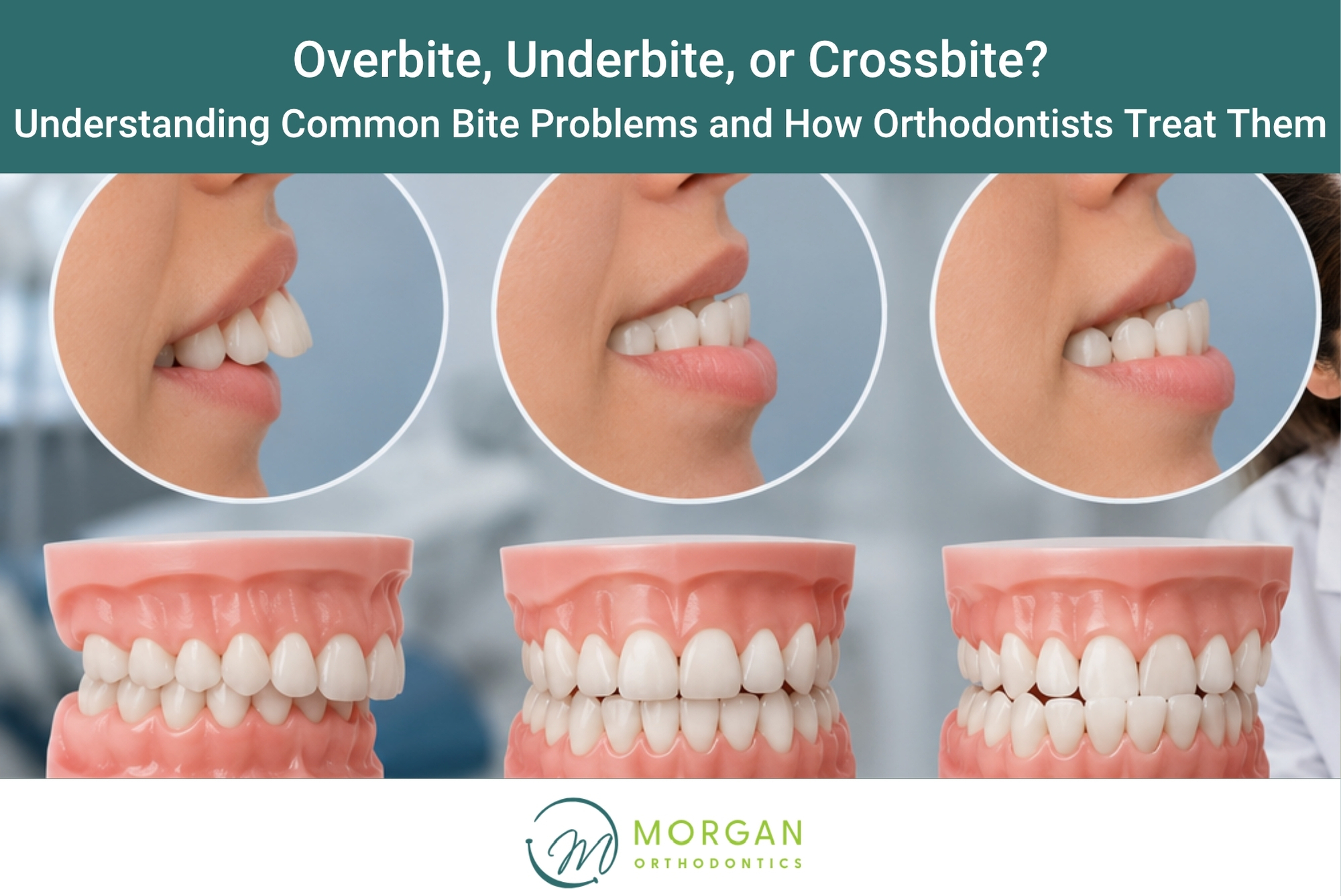
A healthy bite is about much more than having straight teeth. The way the upper and lower teeth come together can influence chewing, speech, tooth wear, jaw comfort, oral hygiene, and long-term dental health. When the teeth or jaws do not align properly, the condition is known as a malocclusion, or an improper bite.
Overbites, underbites, and crossbites are among the most common bite problems treated in orthodontic care. Although some cases are primarily cosmetic, others can affect oral function and contribute to uneven tooth wear or other dental concerns over time.
For patients searching for an orthodontist in Leesburg, VA, understanding the differences between these bite problems is an important first step. At Morgan Orthodontics, patients receive individualized orthodontic evaluations designed to identify the type and severity of the bite problem and determine an appropriate treatment approach.
What Is a Malocclusion?
Malocclusion is the clinical term used to describe improper alignment between the upper and lower teeth when the jaws close. Ideally, the teeth fit together in a balanced relationship that allows the forces generated during biting and chewing to be distributed appropriately.
Malocclusions can develop because of differences in tooth position, jaw growth, dental arch size, or a combination of these factors. Genetics can play an important role, but childhood habits, premature loss of baby teeth, missing teeth, impacted teeth, and other developmental factors can also influence bite alignment.
Why Bite Alignment Matters
A significant bite problem may affect more than the appearance of the smile. Depending on its type and severity, malocclusion can contribute to:
Difficulty biting or chewing certain foods
Uneven or excessive tooth wear
Chipping or damage to certain teeth
Difficulty keeping crowded or overlapping teeth clean
Gum irritation or recession in vulnerable areas
Speech difficulties in some patients
Jaw strain or discomfort in certain cases
Reduced confidence in the appearance of the smile
Orthodontic treatment aims to improve both dental alignment and the functional relationship between the upper and lower teeth.
What Is an Overbite?
An overbite describes the vertical overlap of the upper front teeth over the lower front teeth. Some vertical overlap is normal. A problem occurs when that overlap becomes excessive.
A pronounced overbite is sometimes referred to as a deep bite.
What Causes an Overbite?
An excessive overbite can result from several factors, including inherited jaw relationships, tooth position, patterns of jaw growth, or differences in the eruption of the front and back teeth.
Certain childhood oral habits may also influence the development of the teeth and jaws, although the underlying cause varies considerably among patients.
What Problems Can a Deep Overbite Cause?
The consequences depend on the severity of the bite. In some patients, the lower front teeth may contact the backs of the upper teeth or nearby gum tissue. In others, excessive forces may contribute to abnormal wear.
A deep overbite may be associated with:
Premature tooth wear
Chipping of front teeth
Gum or soft-tissue irritation
Difficulty maintaining ideal oral hygiene
Functional bite concerns
A smile that appears less balanced
Because overbite severity varies, an orthodontic examination is necessary to determine whether treatment is appropriate.
What Is an Underbite?
An underbite occurs when the lower front teeth sit in front of the upper front teeth when the mouth is closed. This relationship may result from tooth position, skeletal jaw relationships, or both.
Some underbites involve only a small number of teeth, while others reflect a more significant difference between the growth or position of the upper and lower jaws.
What Causes an Underbite?
Genetics and facial growth patterns are common contributors. An underbite can develop when the lower jaw grows farther forward relative to the upper jaw, when the upper jaw is comparatively underdeveloped, or when the teeth themselves erupt into positions that create a reversed relationship.
Why Can an Underbite Be a Concern?
A significant underbite can affect the way the front and back teeth function together. Potential concerns include:
Difficulty biting into foods
Uneven tooth wear
Increased stress on certain teeth
Speech differences
Changes in facial balance
Jaw discomfort in some individuals
Because skeletal growth may contribute to an underbite, early orthodontic evaluation can be especially useful in children. Identifying the developing bite allows the orthodontist to determine whether treatment should begin during growth or whether monitoring is more appropriate.
What Is a Crossbite?
A crossbite occurs when one or more upper teeth bite inside the corresponding lower teeth rather than outside them.
Crossbites can affect the front teeth, back teeth, or both.
Anterior Crossbite
An anterior crossbite involves one or more front teeth. In this situation, an upper front tooth may sit behind a lower front tooth when the patient bites down.
Posterior Crossbite
A posterior crossbite occurs toward the back of the mouth. One side or both sides of the upper dental arch may sit inside the lower arch.
Some posterior crossbites are related to the width of the upper jaw, while others result primarily from tooth position.
Why Should a Crossbite Be Evaluated?
Depending on its severity, an untreated crossbite may contribute to abnormal tooth wear, gum problems, uneven forces during chewing, or changes in the way the jaw moves during closure.
In growing children, certain crossbites may benefit from earlier intervention because the jaws are still developing.
How Is a Bite Problem Diagnosed?
Orthodontic diagnosis involves considerably more than simply looking at whether teeth appear straight.
An orthodontist evaluates how the teeth, jaws, and facial structures relate to one another. The assessment may include a clinical examination along with photographs, digital scans or impressions, and diagnostic imaging when appropriate.
Evaluating the Entire Bite
The orthodontist may examine:
Upper and lower tooth alignment
Amount of overbite and overjet
Presence of an underbite or crossbite
Dental arch width
Crowding or spacing
Jaw relationships
Facial proportions
Tooth eruption patterns
Impacted or missing teeth
Growth and development in younger patients
These findings help determine whether the malocclusion is primarily dental, skeletal, or a combination of both.
How Do Orthodontists Treat Overbites, Underbites, and Crossbites?
There is no single treatment that is appropriate for every bite problem. Treatment depends on the patient’s age, growth status, tooth position, jaw relationship, severity of the malocclusion, and individual treatment goals.
Braces
Traditional braces remain an effective and highly controlled method for moving teeth and correcting many types of malocclusion.
Brackets are attached to the teeth and connected with orthodontic wires. Carefully planned forces gradually move teeth toward their desired positions.
Braces may be used to treat:
Deep overbites
Dental underbites
Crossbites
Crowding
Spacing
Rotated teeth
Complex bite relationships
Additional orthodontic components may be incorporated when more specialized tooth movement or bite correction is necessary.
Clear Aligners
Clear aligners can be an option for many teenagers and adults, as well as selected younger patients. The aligners are custom designed to progressively reposition the teeth.
Depending on the specific diagnosis, aligners may be used to address crowding, spacing, overbite, crossbite, and certain underbite relationships.
However, not every malocclusion is best treated with aligners alone. The orthodontist must evaluate the complexity of the bite before determining whether clear aligner therapy is appropriate.
Orthodontic Elastics
Elastics, commonly called rubber bands, may be used with braces or certain clear aligner systems to help improve the relationship between the upper and lower teeth.
Patient cooperation is especially important with elastics. Wearing them according to the orthodontist’s instructions helps treatment progress as planned.
Palatal Expansion
Some crossbites are associated with a narrow upper dental arch or upper jaw. In growing patients, an orthodontic expander may be recommended to increase upper arch width and improve the relationship between the upper and lower teeth.
The effectiveness and type of expansion depend on the patient’s age, growth, and individual anatomy.
Growth-Related Orthodontic Treatment
Children and adolescents may sometimes benefit from treatment approaches that take advantage of ongoing facial and jaw development.
The goal is not necessarily to place braces on every young child. Instead, early evaluation allows the orthodontist to identify conditions in which treatment during growth may offer a meaningful advantage.
Orthognathic Surgery for Severe Skeletal Bite Problems
Some severe bite discrepancies in adults are caused predominantly by the underlying jaw structure rather than tooth position alone.
In selected cases, orthodontic treatment may be coordinated with orthognathic, or corrective jaw, surgery. This is generally reserved for significant skeletal discrepancies that cannot be fully addressed through orthodontic tooth movement alone.
An orthodontist can determine whether a patient’s condition warrants evaluation by an oral and maxillofacial surgeon.
Can Bite Problems Get Worse With Age?
Bite relationships can change throughout life. Teeth naturally experience forces from chewing, oral habits, tooth loss, gum and bone changes, and normal aging.
A malocclusion that is left untreated does not automatically become severe, but certain bite problems can contribute to progressive tooth wear or other dental concerns.
An orthodontic evaluation can help determine whether a particular bite should be treated or simply monitored.
When Should Children Have Their First Orthodontic Evaluation?
The American Association of Orthodontists recommends that children receive an orthodontic evaluation no later than age 7.
This does not mean every seven-year-old needs braces. At this age, children typically have a combination of primary and permanent teeth, allowing an orthodontist to evaluate developing tooth and jaw relationships.
An early evaluation may identify:
Developing crossbites
Significant overbites or underbites
Crowding
Abnormal eruption patterns
Impacted teeth
Jaw growth discrepancies
Oral habits affecting dental development
If immediate treatment is unnecessary, the orthodontist may recommend periodic monitoring as the permanent teeth erupt.
Can Adults Correct an Overbite, Underbite, or Crossbite?
Yes. Orthodontic treatment is not limited to children and teenagers.
Healthy teeth can often be moved orthodontically at virtually any age. Many adults pursue treatment because of bite concerns they have had since childhood, shifting teeth, tooth wear, or a desire to improve their smile.
Adult treatment may include braces, clear aligners, or other orthodontic techniques depending on the diagnosis.
Skeletal discrepancies require particular consideration in adults because facial growth is largely complete. For severe jaw-related malocclusions, orthodontic treatment may occasionally need to be combined with surgical treatment.
How Long Does Bite Correction Take?
Treatment time varies considerably.
A relatively straightforward dental crossbite may require less treatment than a complex skeletal underbite or severe deep bite. Treatment duration can also be influenced by age, biological response to tooth movement, treatment method, case complexity, and patient cooperation.
After a comprehensive examination, the orthodontist can provide a more individualized estimate.
Why Choose an Orthodontist for Bite Correction?
Orthodontists are dentists who complete additional specialized education focused on the diagnosis, prevention, and treatment of dental and facial irregularities.
Bite correction requires careful consideration of how individual tooth movements affect the entire chewing system. Moving a tooth may change how it contacts opposing teeth, making comprehensive treatment planning particularly important.
For individuals searching for an orthodontist in Leesburg, VA, as well as patients in Winchester, Purcellville, and surrounding Northern Virginia communities, Morgan Orthodontics provides specialized orthodontic care focused on creating healthy, functional, and attractive smiles.
Frequently Asked Questions About Overbites, Underbites, and Crossbites
Is an overbite normal?
Some vertical overlap between the upper and lower front teeth is normal. An overbite becomes a potential orthodontic concern when the overlap is excessive or contributes to tooth wear, soft-tissue contact, functional problems, or other dental concerns.
What is the difference between an overbite and overjet?
Overbite describes vertical overlap between the upper and lower front teeth. Overjet describes the horizontal distance between the upper and lower front teeth. A patient can have one or both conditions.
Is an underbite always caused by the jaw?
No. Some underbites result primarily from tooth position, while others are related to the underlying jaw structure. Many patients have a combination of dental and skeletal factors.
Can braces correct an underbite?
Braces can help correct many underbites, particularly when tooth position is a major component. Significant skeletal underbites may require additional treatment approaches. A comprehensive orthodontic evaluation is necessary to determine what can realistically be achieved.
Can Invisalign or clear aligners correct an overbite?
Clear aligners can treat certain overbites, but suitability depends on the severity and cause of the problem. More complex bite relationships may require additional orthodontic techniques or a different treatment approach.
Can clear aligners correct a crossbite?
Certain crossbites can be treated with clear aligners. Others, particularly those associated with inadequate upper jaw width, may require expansion or another orthodontic approach.
What happens if a crossbite is not treated?
Not every crossbite causes the same problems. Depending on its location and severity, a crossbite may contribute to uneven tooth wear, gum concerns, abnormal forces, or altered jaw function. Children with developing crossbites should be evaluated to determine whether early treatment would be beneficial.
At what age should an underbite be evaluated?
An underbite should generally be evaluated when it becomes apparent. Because jaw growth can play an important role, an early orthodontic assessment can help determine whether intervention during childhood is advisable.
Do bite problems cause jaw pain?
Some individuals with malocclusion experience jaw discomfort, but bite problems are not the sole cause of temporomandibular disorders or jaw pain. Jaw symptoms can have multiple contributing factors and should be properly evaluated rather than automatically attributed to the bite.
Will fixing my bite change my face?
Orthodontic treatment can influence smile appearance and dental support of the lips, but the extent of visible facial change varies. Treatment involving significant jaw growth modification or orthognathic surgery may result in more noticeable changes than routine tooth movement.
Is bite correction only cosmetic?
No. Although orthodontic treatment can significantly improve smile aesthetics, bite correction can also address functional concerns such as abnormal tooth contact, chewing efficiency, tooth wear, and dental alignment.
How do I know what type of bite I have?
You may be able to notice obvious characteristics in a mirror, but self-diagnosis is unreliable. Orthodontists evaluate the teeth in three dimensions and consider the underlying jaw relationship. A professional orthodontic examination is the best way to identify the specific type of malocclusion.
Do I need a dentist’s referral to see an orthodontist?
Patients can commonly schedule an orthodontic consultation directly. If you are concerned about an overbite, underbite, crossbite, crowding, spacing, or another alignment problem, contacting an orthodontic office is an appropriate first step.
Schedule an Orthodontic Evaluation With Morgan Orthodontics
An overbite, underbite, or crossbite can affect much more than the appearance of your smile. Understanding exactly how the teeth and jaws fit together allows an orthodontist to develop a treatment plan based on function, dental health, facial development, and aesthetics.
Whether you are considering orthodontic treatment for yourself or wondering whether your child has a developing bite problem, a professional evaluation can provide clear answers.
Patients looking for an experienced orthodontist in Leesburg, VA, Winchester, Purcellville, and surrounding communities can contact Morgan Orthodontics to learn more about available orthodontic treatment options.
Contact Information
Morgan Orthodontics
Leesburg Office
19420 Golf Vista Plaza, Ste. 120
Leesburg, VA 20176
Phone: 703-723-5900
Winchester Office
1841 West Plaza Dr.
Winchester, VA 22601
Phone: 540-667-5446
Purcellville Office
610 E Main Street
Purcellville, VA 20132
Phone: 540-338-8125
Website: morganorthodontics.com
Call Us: (703) 723-5900